The mechanism of modern globalisation has permitted emerging sports such as SailGP to bypass the traditional and lengthy growth cycles experienced by legacy sports such as Formula 1 and Football. SailGP leveraged the already existing global digital infrastructure and standardised an international product that has achieved global market penetration and increased brand visibility in less than a decade which took legacy sports generations to cultivate. This was confirmed by Orunbayev (2023) when he said, “The consumer phenomenon that has accelerated the spread of globalization includes sports. Sports that we had not even heard of a few years ago, and the number of people interested in these sports as spectators or participants is growing rapidly.”
As of 2026, SailGP in its 8th year has generated around $200 million in revenue. It was reported by the Sports Business Journal that the fifth season of SailGP attracted a total of 112000 ticketed attendees, nearly 215 million global broadcast viewers and a 90% increase in social media views.
About SailGP
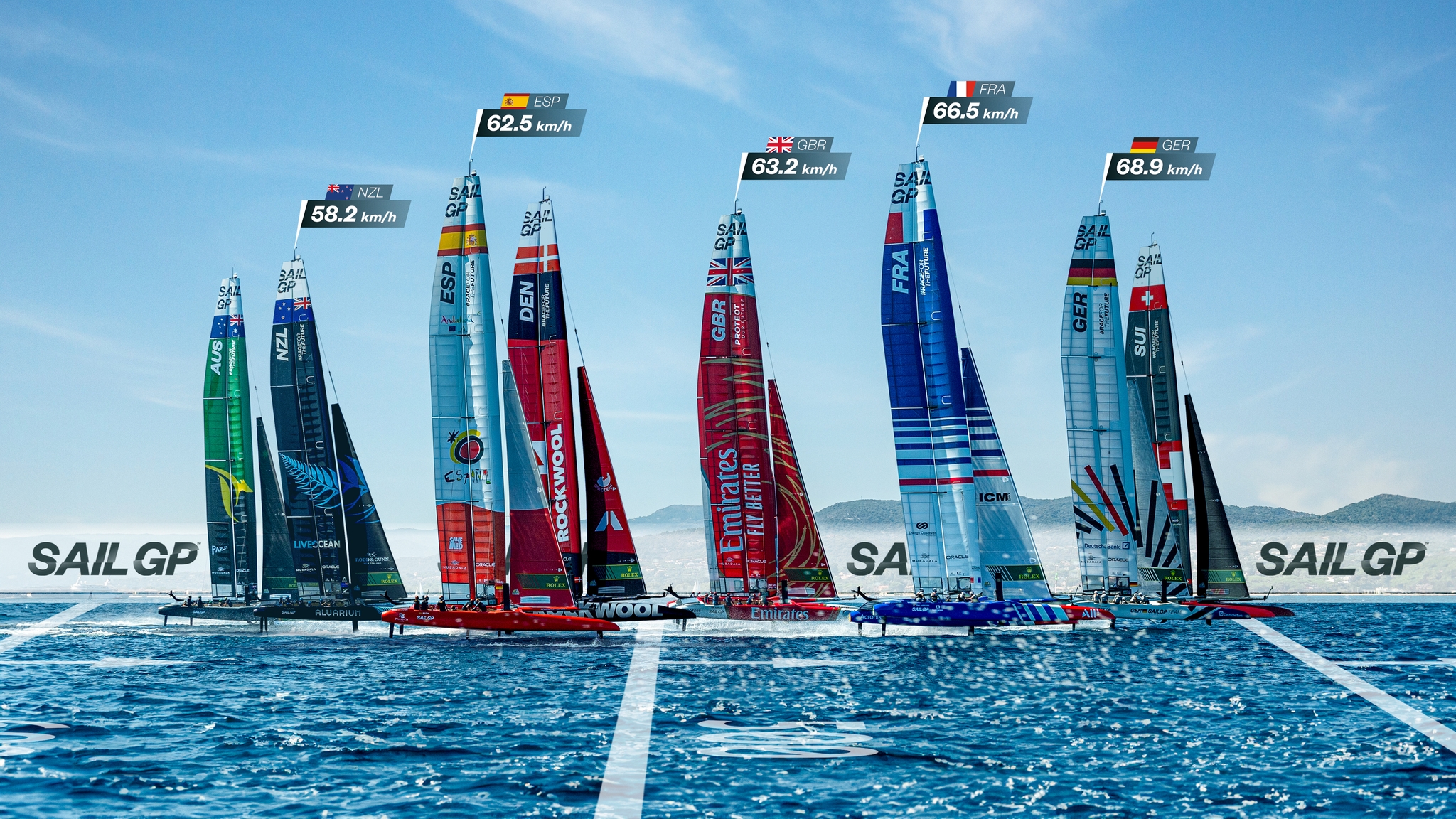
SailGP is known as one of the most thrilling races on water and sometimes referred to as ‘Formula 1 on water’. It is defined as a “close-to-shore, high-speed, high-tech racing series like no other”. It combines cutting-edge tech, iconic global venues, elite athletes and record-breaking speeds to create the most exciting racing on water, The Rolex SailGP Championship. Twelve Nations face each other by competing in identical F50 catamarans, adding a unique dimension to the series. The boats level the playing field by ensuring that all twelve national teams are using the same boat with equal quality and cutting-edge technology, which means the results achieved are mostly dependent on the skills of the athletes. The F50 is the latest development in sailing technology and engineering. It is the result of a ten-year project that produced a machine built for high performance and speed. In fact, the F50 was crowned the World Sailing’s 2019 Boat of the Year and it is the first boat to reach 50 knots (93 kilometres per hour) during a race. In summary, the series involves a machine which is the F50, a crew of six which serve as the human engine, a strategy across shifting winds and a championship at the heart. Moreover, SailGP is on a mission to be the most sustainable and innovative face in modern sport.
Officially SailGP was launched in Australia in 2019 by its founders, New Zealand yachtsman and Olympic Gold medallist, Russel Coutts and American billionaire businessman, Larry Ellison. In its first season SailGP included six five-person teams namely Australia, China, France, Great Britain, Japan and the United States of America. Furthermore, five grand prix were held in their debut year in Sydney, San Francisco, New York, Cowes and Marseille. Australia SailGP Team went on to become the season’s champions led by Olympic gold medallist, Tom Slingsby. Since then, Australia has won the first three championships. On SailGP’s fourth season the fleet expanded to 10 teams, five of which were privately owned and in the fifth season two more teams joined the fleet.
SailGP’s Globalisation Strategy
The concept of globalisation is a modern phenomenon that forces the world to become one large market where media, cultures, technology and finance affect all aspects of life. By opening the markets, globalisation has consequentially created a society of consumers and dominance in capitalistic values which have contributed to the growth of the sports industry. SailGP is treating the world as a single market with a uniform product that is the sailing of identical F50 catamarans in an international racing series with twelve teams competing to win millions in cash prizes. It is exactly this fact that sets it apart from Formula 1 or America’s Cup, where teams with the most money routinely win by building the best cars or boats. SailGP teams use the same equipment with no difference in size or quality. This draws a lot of attention to the skills of the athletes, the strategies implemented during the fifteen-minute races and the dramatic battles against changing winds. SailGP also uses technologically advanced methods to broadcast these races for audiences onsite which allows fans to watch everything that occurs on the boats during the races in real time.
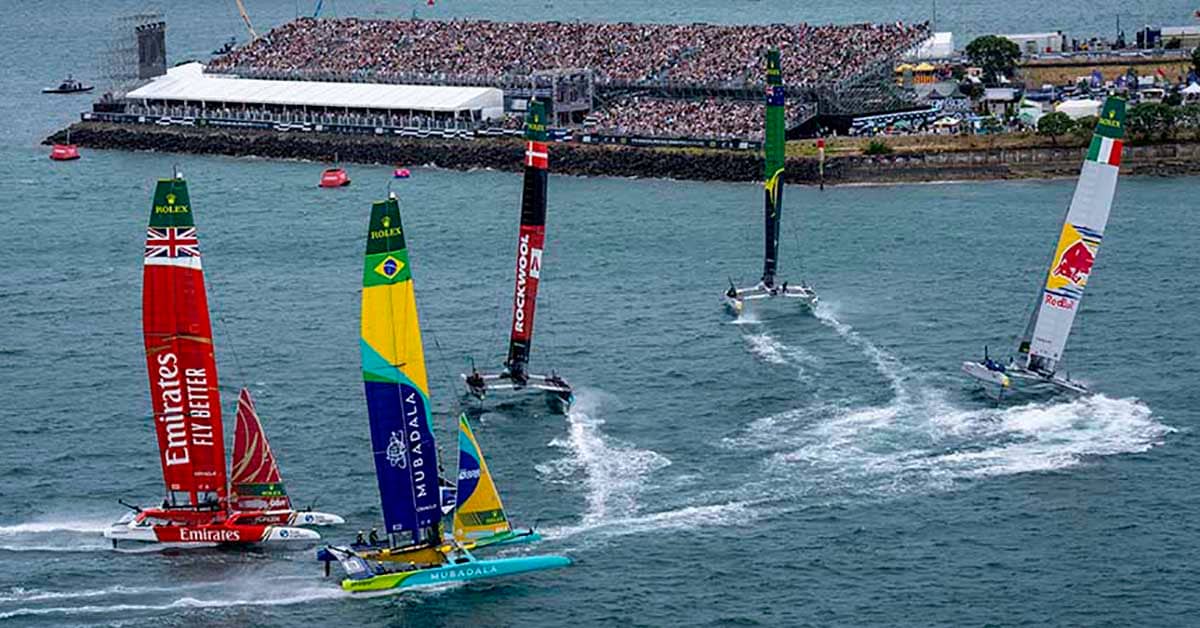
At the third edition of the United Nations World Sports Tourism Congress 2024, SailGP’s representative, Guntur Dwiarmein confirmed that the racing series was modelled after certain elements of Formula 1 and cycling grand tours by seeking to collaborate with brands, partners and media that ensure the global exposure of the brand and are committed to the highest standard of sustainability and reducing the environmental impact of their events. SailGP, as many emerging sports, is altering its image with the hopes of attracting a diverse range of audiences. This is an ongoing strategy that is carried through efforts such their YouTube docu-series, Racing on the Edge, which is similar to Netflix’s Formula 1 Drive to Survive and by ensuring that SailGP races are broadcast across 200 channels.
SailGP’s supply strategy of their product is spread across five continents in a season. Their three-season partnership with DP World allows them to move thousands of expensive and high-tech equipment across the globe keeping in line with sustainable and efficient logistics. DP World, like other partnerships in the racing series, forms part of the event delivery that ensures that spectators in New York have the same thrilling experience as spectators in Geneva.
After a commercially successful conclusion its fifth season, the league has solidified its positon as the fastest growing sports property in the world and the future of emerging sports.