Greek Literature is full of philosophical lessons that even to this modern day remain so accurately relevant to our lives. In 409 BCE, Sophocles wrote a Greek tragedy titled Philictetes (Philoctetes), in this story an important quote arises, “I would prefer even to fail with honor than win by cheating.” Neoptolemus (the son of Achilles) speaks the line when he is pressured by Odysseus to use trickery and deception to steal Hercules’ bow from a wounded warrior. Neoptolemus refuses to take the shortcut, declaring that his character cannot tolerate a victory built on fraud. Clearly Neoptolemus was an honorable man with conviction, however, I cannot say the same about characters of today’s story.
Let me tell you about a bizarre cheating scandal that shocked the ultramarathon world.
The Comrades Marathon is the world’s oldest ultramarathon. It happens yearly in South Africa in KwaZulu-Natal province. The distance it covers is about 90km from the city of Durban to Pietermaritzburg.
Initially established in 1921 as a memorial to South African soldiers who perished during World War I. The event is presently recognized as a legendary South African long-distance running race, the renown of which is consistently expanding globally. An average of 23000 participants compete annually. The run typically averages 11 to 12 hours. However, the most distinguished athletes usually finish it in under 6 hours.
The Comrades Marathon is Organized and hosted by the Comrades Marathon Association (CMA) which is a Non-Profit Organization (NPO) made up of approximately 400 members and governed by its own Board.
Despite its growing popularity, the integrity of the race is plagued with bizarre violations of participation rules through relay-style fraud all of which can be traced back to 1999 with the Motšoeneng Brother’s scandal.
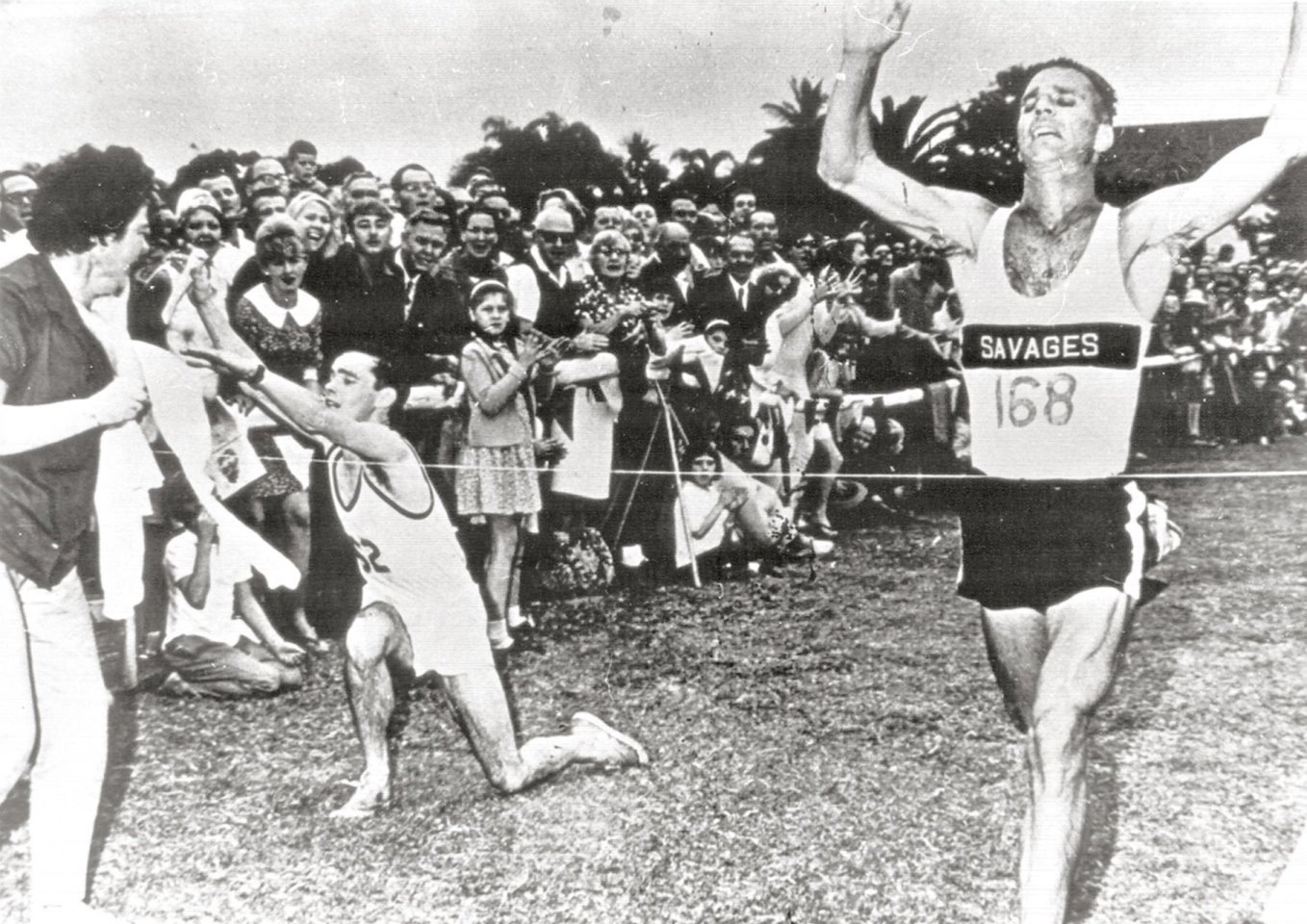
Brothers Sergio (21), an excellent long-distance runner, and Fika (19) Motšoeneng from QwaQwa orchestrated a scam at the Comrades Marathon. Sergio initially finished ninth, however, ultramarathon veteran Nick Bester, who finished 15th, claimed he never saw Sergio pass him. Though initially cleared by the Comrades Marathon Association (CMA), it was later proven that Sergio and Fika ran the race as a relay and were exposed by a photograph published in a newspaper showing watches on opposite wrists.
Sergio, the official runner, started the ultramarathon and ran the first 45 minutes. He then swapped places with his younger brother, Fika, in a portable toilet, giving him his bib and gear which included the newly introduced ‘ChampionChip’ electronic timing mats. Fika ran the middle section while Sergio rested and moved ahead. Later, they repeated the swap, with Fika returning the gear. Sergio re-entered the race, finishing 9th and claiming the gold medal and prize money.
A fellow competitor, Nick Bester launched a formal Complaint. This invoked the governing body’s internal dispute resolution mechanisms. The event organizers bore the responsibility to prove the deception without a doubt. The case relied on photographic evidence of the mismatched watches and timestamps to corroborate the complainant’s claim. CMA convened an internal disciplinary hearing to review the evidence and confront the athlete. Confronted with irrefutable photographic evidence, the athlete’s legal council issued a formal admission of guilt, bypassing a protracted dispute. The CMA mandated the immediate forfeiture of the 9th place position, the novice trophy, and the restitution of the R6000 ($1000) prize money. The CMA exercised its regulatory authority to issue a punitive 10-year ban from the event for both brothers.
The scandal exposed a critical flaw in the event’s operational integrity. Even with the ChampionChip electronic timing system in place, it did not prevent other similar cases of fraudulent misrepresentation to take place along the history of the ultramarathon since the Motšoeneng Brother’s Scandal.
They made it standard mandatory protocol to cross-reference electronic timing splits with official race photography at various checkpoints.
Despite all this, similar scandals arose the year that came after.
Father and son, Andre and Willem van de Vyfer, were banned for life from the ultramarathon after Andre ran the 2002 and 2003 Comrades Marathon races, which Willem was registered for, to secure his son recognition. They were caught because Willem’s recorded ChampionChip splits were identical to Andre’s. Investigation confirmed Andre was photographed running and finishing both races, often wearing two ChampionChips, while Willem was not photographed at all. The consequence was a lifetime ban and disqualification from The Athletic Club in Central Gauteng.
The 1999 scandal forced the CMA to establish a strict legal precedent that allowed them to catch the Van de Vyfers and other subsequent relay style fraudulent activities.
To Maintain the integrity of the event & prevent relay style fraud these are some of the changes that have been made:
- There is no longer a single reliance on competitor complaints or photographic evidence.
- Data Analysts have been hired to monitor time splits in great detail, to look for impossible pace deviations.
- Blind checkpoints to prevent mapping out these locations.
- Pre-Race qualification audits where athletes must submit a sub-4 hour and 50 minute standard marathon time to secure entry into the Comrades Marathon
It must be incredibly frustrating for event organizers to constantly battle deception, but the most tragic part of this story brings us back to the Motšoeneng brothers.
Both Sergio and Fika were genuinely talented athletes. When asked why they orchestrated the relay scam in 1999, Sergio blamed it on desperation and poverty.
You would hope that a 10-year ban would serve as a lesson in the Greek concept of honor. And in 2010, exactly 11 years after his ban, a 33-year-old Sergio Motšoeneng returned to the Comrades Marathon seeking redemption. He ran a brilliant race, finishing in 3rd place and winning 90,000 Rand.
But the redemption arc was a lie. A few weeks later, his drug test came back. He tested positive for a banned steroid. He was stripped of his medal, lost his prize money, and was banned from the sport once again.
I can’t help but wonder what Sergio and Fika could have achieved in this lifetime had they just ran an honest race.