Imagine playing a single game for so long, that the electronic scoreboard literally breaks because it wasnt programmed to count that high. Well, in 2010, two men played tennis for
11 hours and 5 min over 3 very long days.
That is the longest, ever recorded tennis match in male singles history and tennis history.
Now, I am just a little bit confused as to why it took 3 days to crown a champion of the match but in my humble confusion I will endeavour to provide more context to the situation in its entirety.
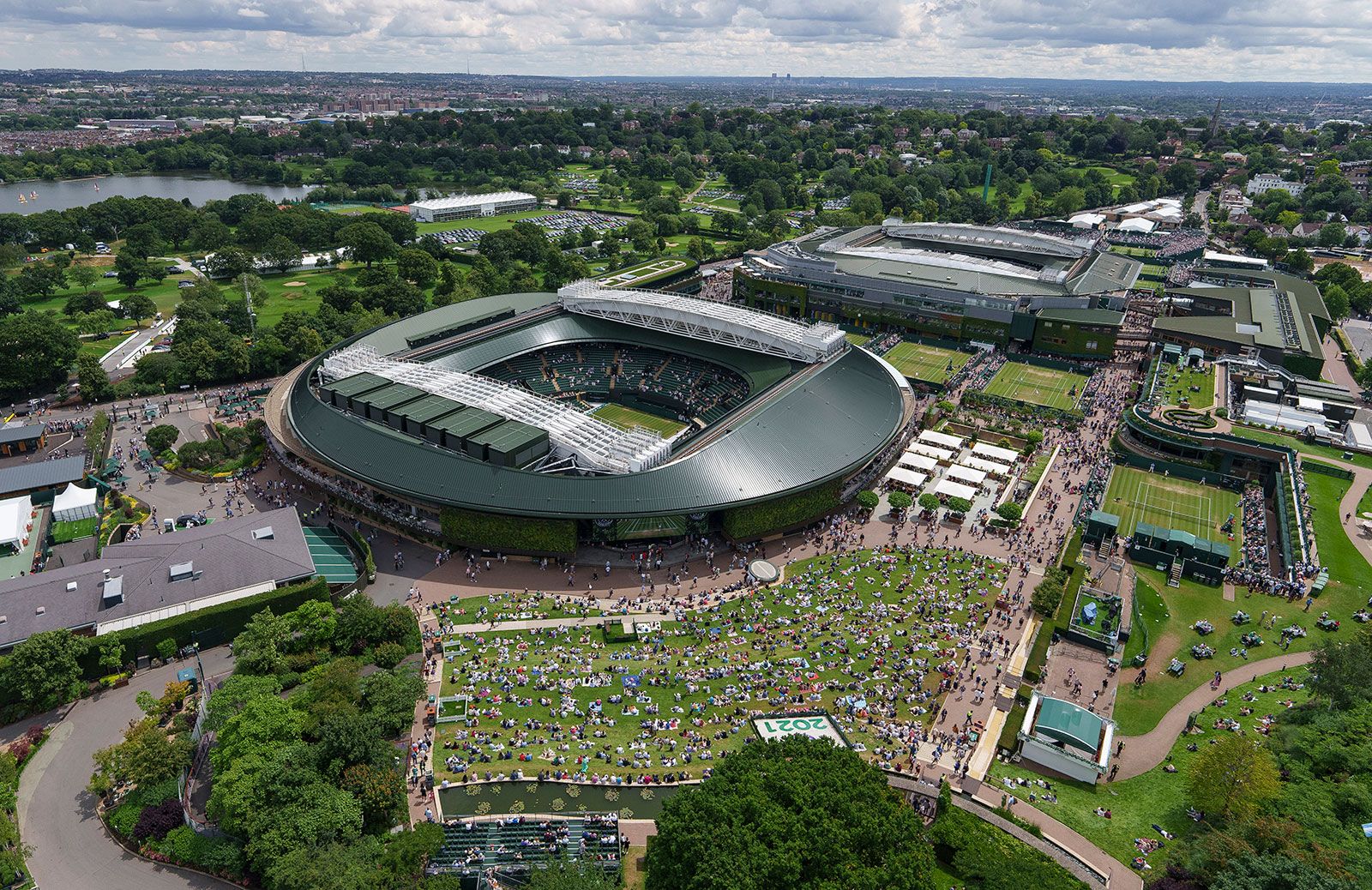
The match took place on June 22nd to 24th, 2010 at the All England Club in London during the Wimbledon Tournament. It occurred between John Isner (American) and Nicolas Mahut (French) where in the end Isner won the game with 6-4, 3-6, 6-7, 7-6, 70-68.
For Grand Slams (Wimbledon, US Open, Australian Open and The French Open), a typical male singles match is characterised as the best of 5 sets. An average match could last between 2.5 to 3.5 hours while some could even stretch to 5 hours or more.
According to this Northyard blog, the actual surface of the court plays a massive role in how long these games drag on:
- On clay courts like the ones you would find at Roland Garros, the ball moves much slower. This results in grueling rallies and significantly extended match durations.
- In contrast, grass courts that you would find in Wimbledon are lightning fast, leading to rapid-fire points and generally swifter matches.
But not in this case because we got an 11 hour match on a grass court and that just tells me that there are no limits to what a human being can accomplish on a tennis court.
So, it’s Tuesday June 22nd, Isner and Mahut had already completed 4 out 5 sets when the match was paused due to lack of natural light at around 9:07 pm local time. Now I googled why natural light is so important in this case, because I would have thought that the tournament would install artificial light just in case some matches had to continue beyond the daily shift of the natural light. I discovered that actually, natural light is crucial and highly prioritized at Wimbledon and dictates the tournament’s daily schedule.
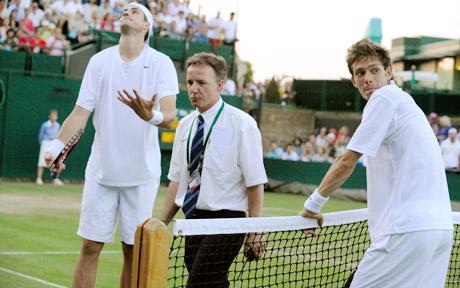
Apparently, it’s not that uncommon for matches to be suspended due to darkness. For example, at this year’s Wimbledon, two matches; Pablo Carreno Busta vs Rafael Jodar and Brandon Nakashima vs Jan-Lennard Struff were suspended. Their matches continued only sixteen hours later when sunshine returned to London. There’s also more to this, the matches that occur at the Center Court or No.1 Court have retractable roofs and artificial light which means these matches never have to be suspended due to lack of natural light. Isner vs Mahout occurred in Court 18 where a plaque currently hangs to honour the match that was played which also explains why the match had to be suspended.
At this point the total match time was 2 hours and 54 minutes.
Then play resumed on Wednesday June 23rd. The match begins at around 2:05 pm and is suspended for second time at around 9:09 pm. This is moment that it becomes longest official match in history with almost 8 hours.
Total match time is around 10 hours at this point.
And then another unprecedented issue occurred. The electronic scoreboard stopped working. Apparently the score board at the time had not been programmed to go beyond the 47 games limit on the 5th set. To explain this more simply, for those of us who don’t know much about tennis and its scoring system; to win a set, you had to win 2 clear games against your opponent. What happened with Isner vs Mahut is that during that 5th set, both athletes were too good at holding their serves that they could not gain the 2 game lead. And take into account that at Wimbeldon in 2010 there were no tie-breakers on the 5th set. You simply had keep playing until someone won by 2 clear games.
As they kept trading games in that continuous back-and-forth of the 5th set, the scores climbed all the way to 59 games each. The scoreboard was left flabbergasted because the IBM programmers who built it never in a million years thought that two humans could physically endure a rally that went past 47 games in a single set.
However, on June 23rd 2010, they not only endured it, they surpassed it.
Finally this epic saga of athletic adventure concluded on Thursday June 24th. Isner finally gained the 2 game lead on Mahut with 70 games against Mahut’s 68. In tennis terms “ Isner finally broke Mahut’s serve to win the match”.
At the end of the match the crowd roared, having witnessed an incredible once-in-a-lifetime tennis marathon. On that 11th hour, Inser collapsed onto his back in what I imagine to be utter joy and relief, having just made history for winning the longest tennis match.
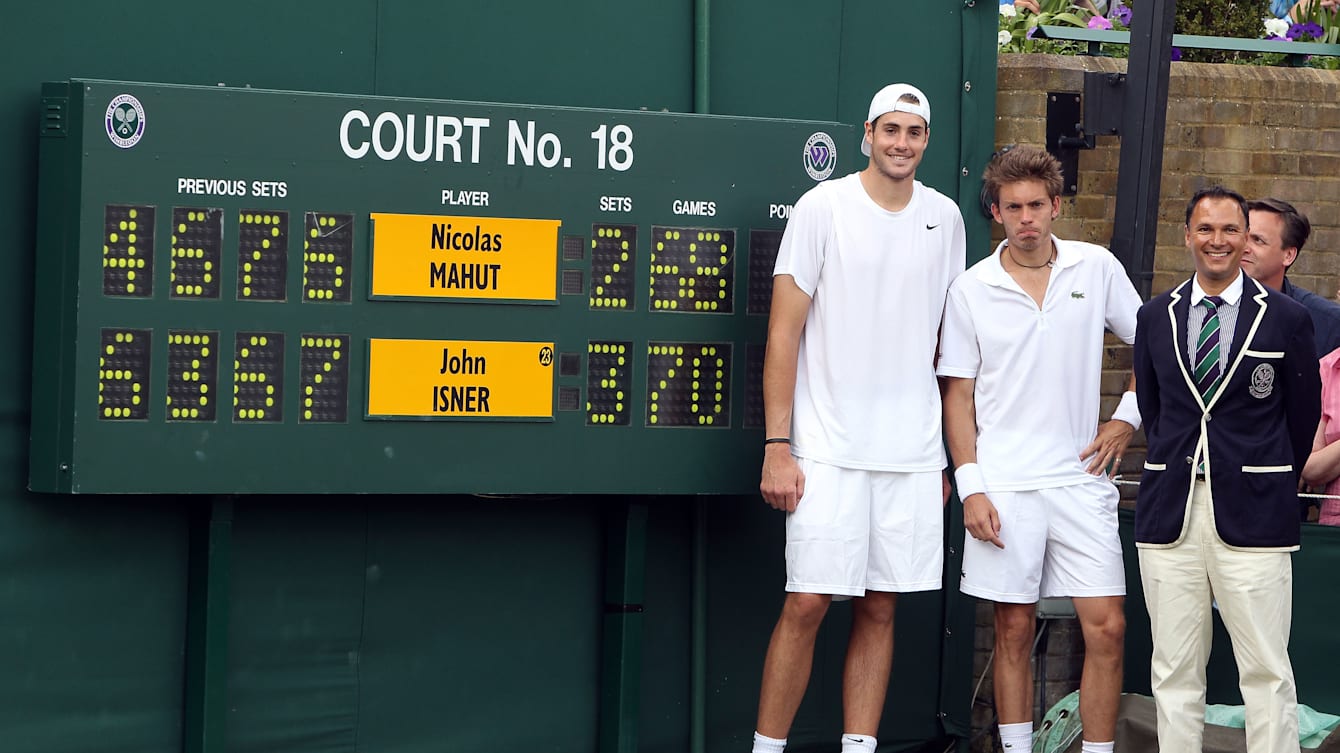
Now here’s what the players had to say about this experience:
ESPN published an article in 2015 titled Five years later where John Isner revealed that, “Those numbers are etched in my memory. It’s a basketball score. 70-68. It always reminds me of that. I’ll never forget these two numbers for as long as I live. It’s just crazy.”
Nicolas Mahut said, “ It’s more of a good memory. But when I think about the match I just can’t stop thinking that I lost it. I will always have the feeling that John Isner is the winner of this match. But, you know, a lot of people came to me after a few months and told me that this match was much more than win or lose. It was something else.”
RTE Sport’s Live Coverage published an article in 2010 titled Nicolas Mahut v John Isner: As it Happened where Isner said: “The guy’s an absolute warrior. It stinks someone had to lose
‘To share this with him was an absolute honour. Maybe we’ll meet again somewhere down the road and it won’t be 70-68”
According to RTE, Mahut accepted his defeat gracefully, noting that despite the arduous nature of the match, both players appreciated the epic contest.
Additionally, Mahut said, “At this moment l’m just really thankful. It was amazing today.
John deserved to win. He served unbelievable, he’s a champion. It was really an honour to play the greatest match ever at the greatest place for tennis. It was very long but I think we both enjoyed it.”
Looking back, I believe this match had to happen to expose some critical flaws in both the tournament’s technology and the traditional rules of tennis. The absence of a fifth-set tie-breaker is the sole reason this match dragged on for 3 grueling days. More hilariously, it was this exact lack of a rule that forced organizers to realize their electronic scoreboards had a hard limit. If the rules didn’t cap the match, the programmers should have assumed there was no limit to how far human endurance could push the score.
But believe it or not, this 2010 marathon wasn’t enough to change Wimbledon’s rules immediately. It wasn’t until eight years later-when John Isner found himself in another ridiculous six-and-a-half-hour marathon against Kevin Anderson in the 2018 semi-finals that organizers finally had enough. In 2019, Wimbledon introduced a final-set tie-breaker that would kick in at 12-12. Eventually, the rules were updated one last time in 2022. Today, across all Grand Slams, if a final set reaches 6-6, it triggers a 10-point super tie-breaker-ensuring we will never, ever see a 70-68 scoreline again.
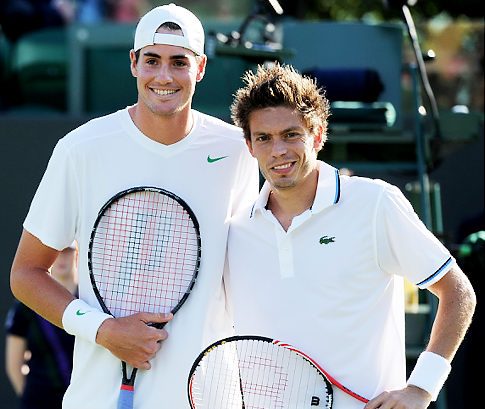
That’s the full story! What are your thoughts on the longest tennis match in history?